


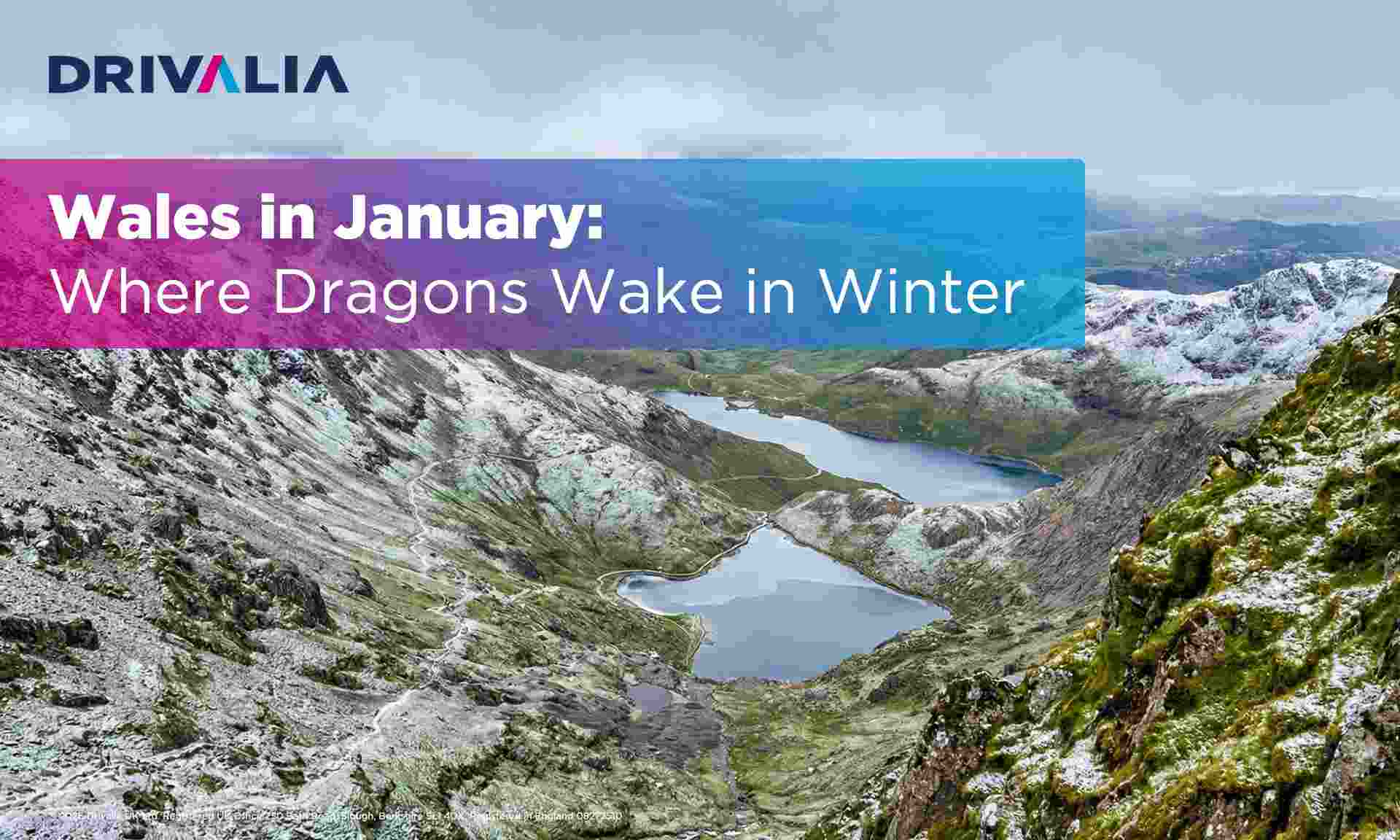
Wales in January is a revelation. While the rest of Britain huddles indoors, this compact country of soaring mountains, dramatic coastlines, and medieval castles comes into its own. Winter strips away the veneer, revealing Wales at its most authentic, where Welsh is spoken in village pubs, where mist clings to mountain peaks, and where the warmth of croeso (welcome) feels particularly genuine.
Here’s where to discover the real Wales when winter shows it at its atmospheric best.
1. Snowdonia National Park: Mountain Majesty Without the Masses
Snowdonia in January is simply breathtaking. Wales’s highest peaks wear mantles of snow, valleys fill with morning mist, and the landscape takes on an almost mythical quality. Mount Snowdon itself, Yr Wyddfa to give it its proper Welsh name, becomes a serious winter mountaineering expedition requiring ice axes, crampons, and proper alpine experience. This is not a casual winter walk, but the lower valleys and lakeside walks offer accessible beauty for all abilities.
Betws-y-Coed, the gateway village, transforms into a cosy mountain retreat. Its stone bridges, woodland walks, and rushing rivers create the perfect base for exploration. The village’s cafes serve proper Welsh cakes and bara brith, while local restaurants showcase Welsh lamb and beef. Book accommodation with mountain views and log fires, and you’ll spend evenings planning the next day’s adventures.
Llyn Padarn and Llyn Peris near Llanberis reflect mountain peaks in their still waters, while the National Slate Museum tells the story of the industry that shaped this landscape. Note that the Snowdon Mountain Railway closes for winter from November until mid-to-late March, so January visitors should focus on the spectacular lower-level walks and attractions instead.
2. Cardiff: Capital City with Celtic Soul
Cardiff combines cosmopolitan energy with Welsh identity in thoroughly appealing ways. Cardiff Castle, right in the city centre, offers Victorian Gothic fantasy wrapped around Roman walls and Norman keeps. It’s utterly unique and never crowded in January. The National Museum showcases everything from Impressionist paintings to Welsh gold, and it’s completely free, though do note it closes on Mondays.
The Millennium Centre in Cardiff Bay hosts world-class performances, from Welsh National Opera to West End shows. The waterfront development offers excellent restaurants, particularly for seafood, with views across the bay. The city’s arcades, Victorian and Edwardian covered shopping streets, provide retail therapy with architectural appeal.
Cardiff’s food scene thrives in winter. The city’s Indian and Italian restaurants are outstanding, while traditional Welsh pubs serve cawl (hearty lamb stew) and locally brewed ales. The Principality Stadium dominates the city centre, and if you can time your visit for a Six Nations rugby match in February or March, you’ll experience Welsh passion at its most intense. The 2026 tournament begins on 31st January, with Wales’s first home fixture at the Principality Stadium scheduled for mid-February.
3. Pembrokeshire Coast: Dramatic Shores and Coastal Villages
The Pembrokeshire Coast Path offers some of Britain’s most spectacular coastal walking, and January reveals it at its most dramatic. Atlantic storms crash against ancient cliffs, seabirds wheel overhead, and beaches stretch empty beneath towering headlands. This is coastal Wales in all its elemental glory.
Tenby, with its pastel-coloured Georgian houses clustered around a harbour, provides a perfect base. The town’s medieval walls, sandy beaches, and excellent restaurants create year-round appeal. St David’s, Britain’s smallest city, centres on its magnificent cathedral, a place of pilgrimage for 1,500 years that feels particularly spiritual in winter’s quiet. The cathedral remains open daily for visitors and services, and January’s tranquillity offers the perfect opportunity to appreciate its ancient atmosphere.
The coastal villages of Solva, Porthgain, and Abercastle offer authentic appeal and excellent seafood. Pembrokeshire’s crab, lobster, and laverbread (traditional seaweed delicacy) feature prominently on local menus. The area’s coastal pubs, with their open fires and harbour views, define cosy winter refuge.
4. Brecon Beacons: Dark Skies and Mountain Walks
The Brecon Beacons (Bannau Brycheiniog) hold International Dark Sky Reserve status, making January’s long nights perfect for stargazing. On clear evenings, the Milky Way stretches overhead in breathtaking clarity, with visibility that ranks among the best in the world. The Brecon Beacons Visitor Centre runs winter stargazing events that reveal the universe in spectacular detail.
By day, the mountains offer excellent winter walking. Pen y Fan, South Wales’s highest peak, challenges with its ascent but rewards with panoramic views across the national park. The Waterfall Country around Ystradfellte provides easier terrain, with cascades tumbling through wooded gorges, some freezing into ice sculptures in the coldest weather.
Brecon town itself appeals with independent shops, traditional pubs, and its Norman cathedral. The area’s market towns of Crickhowell, Abergavenny, and Hay-on-Wye each offer distinctive character. Hay-on-Wye, the town of books, becomes particularly inviting in winter, with its 20+ bookshops providing hours of browsing pleasure beside wood-burning stoves.
5. Conwy: Medieval Perfection Preserved
Conwy represents medieval Welsh town planning at its finest. The UNESCO World Heritage castle and town walls remain remarkably complete, creating an atmospheric destination that January enhances rather than diminishes. Walk the town walls for views across the estuary and Snowdonia beyond, then explore the narrow streets lined with houses that have stood for centuries.
Plas Mawr, an Elizabethan townhouse, offers fascinating insights into 16th-century life, while Britain’s smallest house, just 3 metres wide, provides a quirky photo opportunity. The town’s position on the North Wales coast means excellent seafood restaurants, particularly for mussels from the Conwy estuary.
Nearby Llandudno, Victorian seaside resort par excellence, maintains its elegance year-round. The pier, promenade, and Great Orme provide winter walks with bracing sea air and coastal views. The town’s traditional tea rooms and hotels offer refined comfort when exploration requires warm refuge.
6. Hay-on-Wye: Book Lover’s Paradise
Hay-on-Wye in January belongs to serious book lovers and those seeking literary refuge from winter. This small border town houses over 20 bookshops in buildings that include a converted cinema and a medieval castle. Richard Booth’s Bookshop, the granddaddy of them all, offers maze-like rooms stuffed with volumes on every conceivable subject.
Winter brings particular appeal, with log fires in bookshop cafes, the chance to actually browse without crowds, and time to discover hidden treasures. The town’s position on the edge of the Brecon Beacons means excellent walking nearby, while its restaurants and pubs serve hearty Welsh fare perfect for cold days.
The surrounding countryside, straddling the Wales-England border, offers scenic drives through hills and valleys. Offa’s Dyke Path runs near the town, providing challenging hiking for the energetic.
7. Anglesey: Island Beauty and Coastal Drama
Anglesey, connected to mainland Wales by Telford’s magnificent Menai Suspension Bridge, offers island atmosphere without isolation. The coastline, designated an Area of Outstanding Natural Beauty, features everything from sandy beaches to dramatic cliff scenery. South Stack lighthouse, perched on its rocky island, provides one of Wales’s most photographed views.
Beaumaris Castle, the last and largest of Edward I’s Welsh fortresses, impresses with its symmetry and scale. The town itself offers Georgian elegance, excellent restaurants, and views across the Menai Strait to Snowdonia. Anglesey’s oysters and seafood feature prominently on local menus.
The island’s interior reveals a softer landscape of fields and villages, with Newborough Forest and Beach offering woodland walks leading to expansive sands. The village with the longest place name in Britain, Llanfairpwllgwyngyllgogerychwyrndrobwllllantysiliogogogoch, provides amusing photo opportunities. The name itself was a 19th-century marketing invention by a local tailor, though the church of St. Mary and St. Tysilio dates back to 7th-century foundations and offers genuinely interesting history.
8. Portmeirion: Italianate Fantasy in Welsh Reality
Portmeirion, the extraordinary Italianate village created by architect Clough Williams-Ellis, becomes even more surreal in winter. This architectural fantasy, perched on its own peninsula overlooking Cardigan Bay, provided the setting for cult TV series The Prisoner and continues to enchant visitors with its pastel-coloured buildings, towers, and follies.
The village hotel offers luxury accommodation, while self-catering cottages scattered throughout the grounds provide more independence. Winter rates make this unique destination genuinely accessible. The surrounding Ffestiniog Railway, a narrow-gauge heritage line, operates winter services through spectacular mountain scenery.
Nearby Porthmadog and Criccieth offer traditional Welsh coastal town character, with castles, harbours, and excellent fish and chips. The area provides perfect access to both Snowdonia and the Llŷn Peninsula.
9. Llŷn Peninsula: Remote Beauty and Authentic Wales
The Llŷn Peninsula extends into the Irish Sea like a long finger, offering remote beaches, quiet villages, and the strongest Welsh-speaking culture in Wales. January brings wild beauty, with storms rolling in across Cardigan Bay, empty beaches, and coastal paths revealing dramatic headlands.
Abersoch provides a sailing and surfing centre with year-round appeal, while quieter villages like Aberdaron and Nefyn maintain fishing village authenticity. The peninsula’s tip near Aberdaron offers views to Bardsey Island, traditional place of pilgrimage and now nature reserve rich with seabirds.
Accommodation ranges from coastal hotels to farm B&Bs, all offering genuine Welsh hospitality. The peninsula’s restaurants serve locally caught seafood and Welsh lamb, while village pubs become particularly welcoming in winter weather.
10. Machynlleth: Gateway to Mid-Wales
Machynlleth, the ancient capital of Wales, provides an excellent base for exploring Mid-Wales’s quieter landscapes. This market town maintains traditional Wednesday markets and hosts the Museum of Modern Art Wales (MOMA Machynlleth) in a converted chapel. Winter opening hours run from 10am to 4pm, and the museum closes on Sundays and Mondays, so plan your visit accordingly.
The surrounding mountains and valleys offer excellent walking, cycling, and simply driving through stunning scenery. The Dyfi Valley provides access to Wales’s last remaining population of red kites, while mountain biking trails around Machynlleth rank among Britain’s best.
The town’s pubs and cafes serve proper Welsh food, with cawl and Welsh rarebit featuring prominently. Accommodation options include characterful coaching inns and comfortable B&Bs.
Practical Welsh Wisdom
Wales in January requires the right mindset and the right gear. Pack waterproofs as standard, as Welsh weather can deliver four seasons in one day. Layers work best: thermals, fleece, and waterproof shell. Good walking boots prove essential, even for town exploration on slippery cobbles.
January days are short, with sunrise around 8am and sunset by 4:30pm, but the quality of light makes photography spectacular. Welsh weather is changeable rather than uniformly grim: storms blow through quickly, leaving crystal-clear air and dramatic skies.
Wales’s compact size makes exploration manageable. You can drive east to west, from the English border to the coast at Aberystwyth, in around two to two and a half hours. However, travelling north to south takes considerably longer, with at least four to five hours needed on winding A-roads, and you should budget extra time in January when mist and ice may slow progress.
For visitors arriving by air, arranging car hire at Bristol Airport provides the ideal starting point for exploring South and Mid-Wales, with Cardiff, the Brecon Beacons, and Pembrokeshire all within easy reach. Do be aware that the M4 Prince of Wales Bridge can occasionally close or face restrictions during the Atlantic storms that sweep in during winter months, so check conditions before setting off.
Roads are generally excellent, though mountain passes occasionally close in severe weather. Trains connect major towns, while local buses serve rural areas with surprising efficiency.
Accommodation offers outstanding value in January. Book places with good restaurants attached, as you’ll appreciate not having to venture out on the wildest evenings. Welsh hospitality shines year-round, but January brings particular warmth when locals have time to chat and share stories.
Learn a few Welsh words, such as bore da (good morning), diolch (thank you), and hwyl fawr (goodbye), and you’ll find the warmth of welcome increases exponentially. Wales takes pride in its language and culture, and visitors who show interest are rewarded with genuine connection.
Wales in January isn’t about guaranteed sunshine or easy conditions. It’s about experiencing a country at its most authentic, where landscape takes centre stage, where culture remains vibrantly alive, and where the welcome feels all the more genuine for being offered when weather keeps casual tourists away.
Embrace the elements, pack the right gear, and Wales will reward you with dramatic landscapes, fascinating history, outstanding food, and the kind of authentic travel experiences that create lasting memories. After all, there’s no such thing as bad weather in Wales, only inappropriate clothing and insufficient Welsh cakes.
Best time to visit: Mid-January offers settled conditions after New Year festivities. Expect 4-8°C in lowlands, colder in mountains. Rainfall is frequent but rarely all-day. Pack waterproofs, embrace the drama, and discover Wales at its most magnificent.